
Content on Roofline Routine is for general informational purposes only and does not constitute professional contractor or project advice. Roof work involves fall risk; consult a qualified professional before climbing or repairing.
Roof Care
Reading your roof from the ground
Most useful roof checks happen with your feet on the ground. A pair of binoculars, a notebook, and a steady routine after storms will tell you a lot about how your roof is aging.
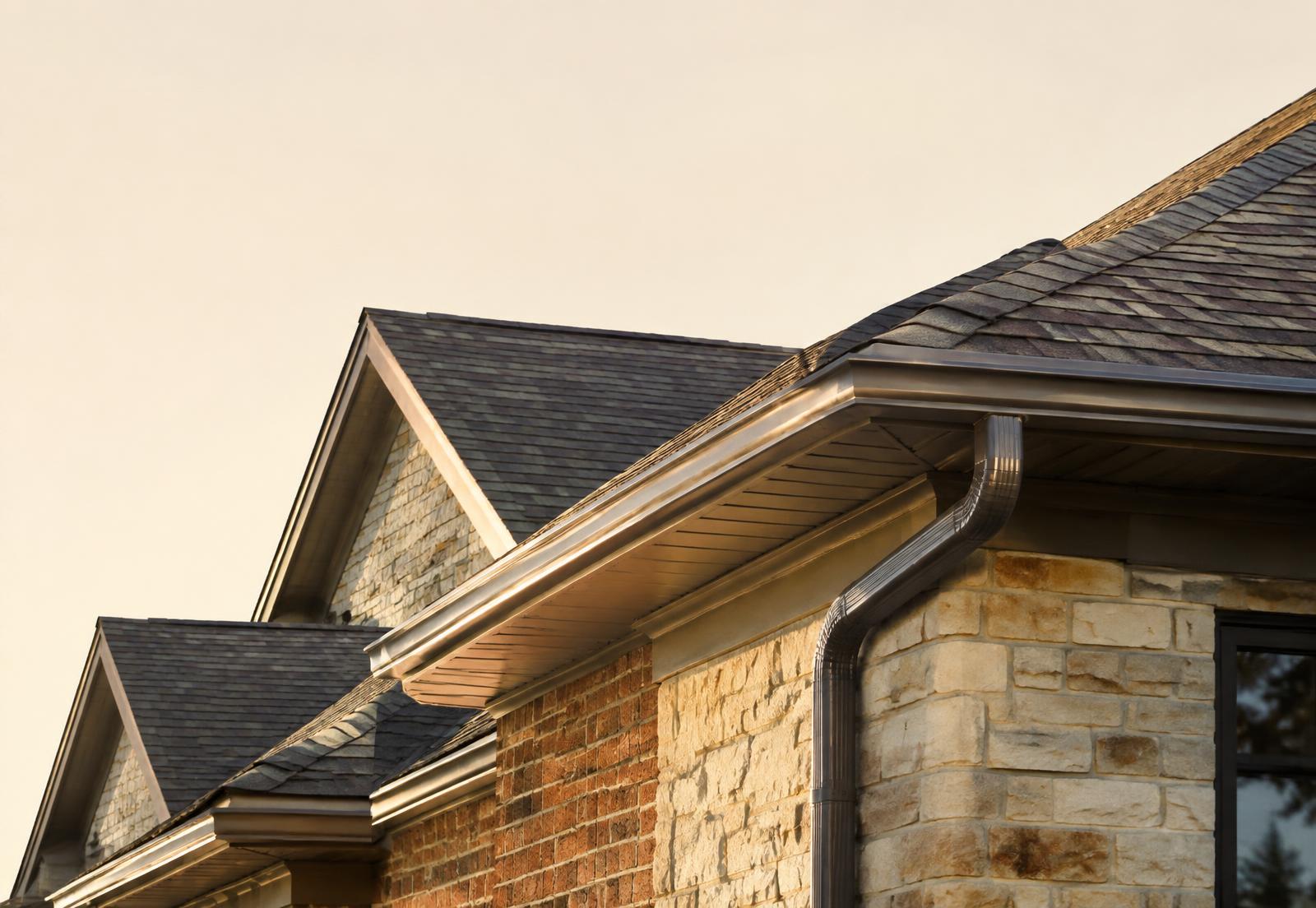
The ground-level walkaround
Walk the full perimeter in daylight, ideally twice a year and after major wind or hail. Look at each roof plane from a few angles so light catches irregularities.
- Shingles that look lifted, curled, cracked, or missing
- Dark streaks or patches that differ from the surrounding surface
- Granules collecting at downspout outlets
- Sagging lines along the ridge or eaves
Flashing awareness
Flashing is the metal or membrane that seals transitions around chimneys, vents, skylights, and wall joints. These transitions are common places for water to find its way in.
- Gaps or separation where flashing meets the chimney
- Rust or lifted edges around vent pipes
- Stains on interior ceilings below these areas
Check from the attic too
On a bright day, look for daylight through the roof deck, damp insulation, or water marks on rafters. Note anything unusual with a date so changes are easy to compare later.
When to stop and call someone
If you see active leaks, widespread damage, or anything that requires climbing, stop there. Write down what you observed and share it with a qualified, licensed roofing professional of your choosing.
Want a seasonal nudge to check this?
Get Exterior Care Reminders